


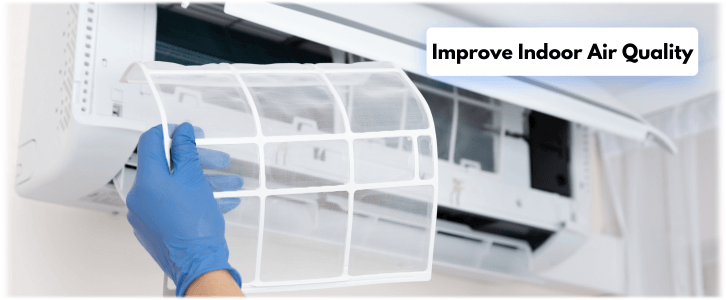
Reliable HVAC Mold Removal in Dallas, TX helps homeowners address visible mold-like growth and moisture-related buildup around heating and cooling equipment. Dallas systems work hard through long, hot summers. Therefore, condensation and humidity can create damp conditions around certain components. Early attention can help prevent a manageable concern from becoming more difficult. Call (469) 202-7540 today to schedule professional service.
Professional HVAC Mold Removal in Dallas, TX
Your HVAC system manages temperature and moisture whenever it cools your home. However, unwanted moisture can remain when drainage or airflow problems develop.
Our technicians first check accessible equipment and nearby areas for visible buildup. Then, we clean affected surfaces using methods suited to the components. Additionally, we look for moisture conditions that may contribute to recurring problems.
Professional HVAC mold cleaning addresses affected surfaces instead of simply masking musty odors. Moreover, understanding the moisture source can help homeowners make better maintenance decisions.
Why Mold Can Develop Around HVAC Components
Dallas cooling systems often operate for many hours during summer. Consequently, cooling equipment handles significant amounts of heat and moisture.
Condensation naturally forms during the cooling process. However, clogged condensate drains can allow moisture to collect where it should not.
Dirty coils, poor airflow, and nearby leaks may also contribute to damp conditions. Therefore, identifying the cause matters as much as cleaning visible buildup.
Signs You May Need HVAC Mold Removal in Dallas, TX
A persistent musty odor near HVAC equipment can provide an early warning. You may also notice unusual discoloration on accessible components.
Additionally, recurring moisture around an air handler or drain pan deserves attention. Odors that become stronger when the AC starts can also signal a concern.
However, ordinary dust and dirt can sometimes resemble mold-like growth. For that reason, homeowners should avoid making conclusions based on appearance alone.
Addressing Moisture Throughout the System
Cleaning visible buildup represents only part of the process. First, we evaluate accessible affected areas. Next, we look for conditions that may allow excess moisture to remain.
Some systems may need air duct mold removal when contamination affects duct surfaces. Meanwhile, air duct cleaning can address accumulated dust and debris elsewhere in the ventilation system.
A ductwork inspection may reveal damaged sections, loose connections, or moisture concerns. Likewise, AC coil cleaning can address dirt around cooling coils when buildup affects those components.
Each option serves a different purpose. Therefore, we recommend work according to the actual condition of your HVAC system.
Local HVAC Mold Care for Dallas Homes
Dallas includes older ranch homes, townhouses, brick properties, and newer construction. As a result, HVAC equipment placement varies considerably.
Homes in Lake Highlands may have different system layouts than properties in Oak Cliff or Preston Hollow. Meanwhile, houses near White Rock Lake may experience changing seasonal moisture conditions.
Properties in ZIP codes 75214, 75230, and 75238 can also contain equipment of different ages. Therefore, we adjust our approach to the system in front of us.
Help Reduce Future Moisture Problems
Regular maintenance can help homeowners identify developing moisture concerns earlier. For example, changing filters on schedule can reduce dust around system components.
Additionally, keeping condensate drains clear supports proper moisture removal. Homeowners should also address plumbing or roof leaks quickly.
Professional air conditioner mold cleaning may address affected cooling components. However, controlling the moisture source remains important for reducing recurring buildup.
Frequently Asked Questions
What causes mold-like growth around HVAC equipment?
Condensation, high humidity, drainage problems, leaks, and accumulated dust can create conditions that support unwanted growth around HVAC components.
Can HVAC mold-like buildup return after cleaning?
Yes. Moisture can allow buildup to return, so homeowners should also address drainage problems, leaks, and excessive indoor humidity.
Why should Dallas homeowners address HVAC mold concerns quickly?
Long Texas cooling seasons can create persistent moisture around heavily used equipment. Professional HVAC Mold Removal in Dallas, TX cleans affected surfaces and helps identify conditions that may encourage recurring buildup.
Do not let moisture-related buildup remain around your heavily used cooling system. Call (469) 202-7540 today for professional HVAC Mold Removal in Dallas, TX.